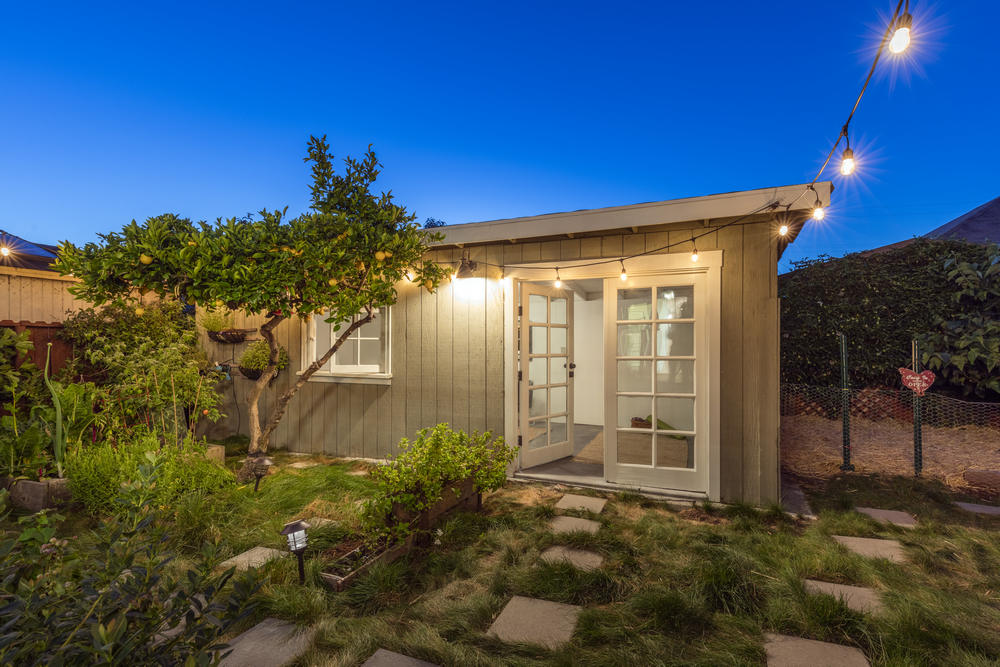
How Much Does It Cost to Build an ADU in San Diego?
If you’re starting to look into building an ADU for your property, the first thing you probably want to know is the cost. We hear this question from nearly every San Diego homeowner before anything else: “How much does an ADU actually cost?”
Most ADUs in California cost between $275,000 and $500,000, though prices can climb higher depending on size, site conditions, and finish level. In San Diego, where labor is pricier and city requirements are stricter, a full-service ADU build (plans, design, permits, materials, and construction) usually averages $400 to $500 per square foot. Smaller garage conversions tend to land on the lower end, while large detached units with premium finishes can easily climb above the average.
This guide is meant to give you a realistic picture before you get too far into the planning process. We’ll break down what different ADU sizes typically cost, where budgets often increase unexpectedly, and how site conditions can influence the final price. By the end, you should have a practical framework for deciding whether an ADU makes sense for your property.
Table of Contents
How Much Does It Cost to Build an ADU in San Diego?
ADU prices in San Diego run a bit higher than the California average. Labor rates are steeper here, city permitting fees are more complex, and coastal or hillside lots often add extra site work. Still, most homeowners fall into a predictable range once you break it down by size and type.
ADU Cost by Size in San Diego
Most ADU budgets fall into predictable ranges once you compare projects by square footage.
| ADU Size | Typical Layout | Average Cost Range | Average Cost Per Sq.Ft. |
|---|---|---|---|
| 400-500 Sq.Ft. | Studio or 1 Bedroom | $200K-$275k | $420-$520 |
| 600-800 Sq.Ft. | 1-2 Bedrooms | $275K-$400K | $400-$500 |
| 1,000-1,200 Sq.Ft. | 2-3 Bedrooms | $380K-$550k+ | $380-$460 |
These ranges assumes a full-service ADU build where design, plans, permits, materials, and construction are all included. Site conditions such as steep lots, utility upgrades, or difficult access can push projects above these ranges.
Breakdown of ADU Costs in San Diego
Building an ADU isn’t just about square footage. It’s a combination of fixed and variable costs that all add up to your final budget. Here’s how the main cost categories typically break down in San Diego:
Design & Engineering
When you begin an ADU project, the first dollars you spend usually go toward design. A draftsman or architect will create the layout, determine where the unit sits on your lot, and work out the roofline, windows, and doors. This step also includes checking that the design complies with California and San Diego requirements for zoning, setbacks, and lot coverage.
-
Drafting & layout: $3,000-$7,000 (typically includes code research and feasibility checks).
-
Engineering & Title 24 energy reports: $2,500-$5,000 (required as part of your construction document package when submitting to your local jurisdiction for obtaining a permit).
-
Interior Design & Material Selection: $3,000-$8,000. *While not required for permits, this phase is standard in most design-build projects.
-
Additional studies (case by case):
-
Soils report: $4,000-$6,000
-
Property survey: $1,500-$2,500
-
Minor or Major grading plan (if significant terrain changes are needed): $3,000-$5,000+
-
Not every homeowner will need all of these add-ons, but it’s smart to budget for at least some extras. Even before you submit plans to the city, design and engineering costs often add up to $8,500-$20,000 for a typical San Diego ADU.

Permits & Fees
Once your plans are complete, the next hurdle is getting them approved.
Every ADU in San Diego requires city or county review, which involves multiple departments: planning, building, fire and engineering (If you’re still trying to determine whether your property actually qualifies for an ADU, it’s worth reviewing the San Diego ADU requirements before moving forward with design or permit plans).
Most jurisdictions accept digital submissions now, but San Diego County still requires physical submittals, which come with additional printing and delivery costs.
-
Building permit & plan check fees: $3,000-$8,000 (depending on ADU size and complexity).
-
Impact fees: Waived in many cases for ADUs under 750 sq. ft., but for larger units you can expect to pay $3-$5 per sq.ft. for school or infrastructure fees.
-
Inspection fees: $1,000-$2,000, usually spread across foundation, framing, and final inspections.
-
Submittal costs: $500-$1,000 if your jurisdiction requires physical plan sets (printing, courier delivery, etc.).
-
Sewer and water connection fees: $2,000-$5,000 on average, but older homes or tricky sites can push this much higher if lines need to be upgraded or extended.
In San Diego, most homeowners should budget $7,000-$20,000 total for permits and related fees. Skipping this line item in your budget is one of the easiest ways to underestimate your project cost.
Construction
In most San Diego ADU projects, construction costs account for roughly 80-90% of the total budget. This portion includes the structure itself, site preparation, utility connections, required safety systems, and the interior finishes that make the unit livable.
However, the way that cost is distributed can vary significantly depending on the property. On flat lots with good access, most of the budget goes toward the structure and finishes. On hillside or constrained sites, grading, retaining walls, and utility work can rival or even exceed the cost of the building itself.
For example, a detached 750 sq. ft. ADU on a flat lot with easy access, built within about 15 feet of the existing home, might break down roughly like this:
- Vertical construction (structure): $220,000-$250,000
- Site development: $10,000-$15,000
- Utility connections and upgrades: $15,000-$20,000
- Interior finish materials: $25,000-$35,000
- Landscaping and hardscape: $10,000-$20,000
- Solar system installation: $15,000-$20,000
The main construction cost drivers typically include:
- Vertical construction (structure): foundation, framing, roofing, exterior walls, insulation, windows, drywall, and core building systems.
- Site development and grading: excavation, retaining walls, drainage, slope stabilization, and preparing the lot for construction.
- Utility connections and upgrades: water, sewer, electrical, gas lines, and service upgrades when the existing infrastructure cannot support the new unit.
- Finish materials and interior systems: cabinetry, flooring, tile, plumbing fixtures, lighting, appliances, and interior trim.
- Safety and energy requirements: solar systems, fire sprinklers when required, and energy compliance measures.
- Landscaping and hardscape: walkways, patios, fencing, drainage improvements, and exterior finishes around the ADU.
Construction typically represents the longest phase of the project. If you’re curious about how long each stage takes from permits to final inspection, you can read our breakdown of how long it takes to build an ADU in San Diego.

Cost to Build an ADU by Type
Not all ADUs cost the same to build. The design, location, and intended use play a big role in your budget. Here’s what you can expect when comparing the average cost to build an ADU in San Diego based on type:
Detached ADU Cost
When people ask “how much does it cost to build a detached ADU?”, they’re usually thinking of a backyard home with its own walls, roof, and foundation. Because detached ADUs are essentially small houses, they tend to be the most expensive type to build.
-
Typical Cost in San Diego: $380-$450 per Sq.Ft.
-
Size Range: 400-1,200 Sq.Ft.
-
Ideal For: Long-term rentals, guest houses, multigenerational living.
Detached ADUs require more site work, new utility connections, and separate foundations, which drives up the cost compared to attached or converted spaces.
For example, in one of our recent detached ADU projects in San Diego, site access and grading played a major role in determining the final construction cost.
Attached ADU Cost
An attached ADU shares at least one wall with the main house. These can be first-floor additions or second-story extensions.
-
Typical Cost in San Diego: $350-$420 per Sq.Ft.
-
Size Range: 400-1,200 Sq.Ft.
-
Ideal For: Expanding living space, creating a private suite, or maximizing property value without building separately.
Because attached ADUs can share utilities and infrastructure with the main home, they sometimes cost less than detached units. However, structural tie-ins, rooflines, and matching finishes can make them more complex.
Garage Conversion ADU Cost
One of the most budget-friendly ways to add living space is converting an existing garage into an ADU.
-
Typical Cost in San Diego: $100,000-$180,000
-
Size Range: 200-500 Sq.Ft.
-
Ideal For: Small rentals, guest suites, home offices.
Even though garage conversions use an existing structure, you’ll still need to meet all building codes, which can mean replacing foundations, upgrading electrical, insulating walls, and adding plumbing.
Second-Story ADU Cost
If you want to preserve your yard space, you might ask, how much does it cost to build a second-story ADU?
-
Typical Cost in San Diego: $400-$500 per Sq.Ft.
-
Size Range: 500-1,000 Sq.Ft.
-
Ideal For: Maximizing square footage on small lots, creating private living space above the main home.
Second-story ADUs can cost more due to engineering requirements, structural reinforcement, and added safety features like exterior staircases.
High-End ADU Construction Costs
If you’re going for unique architectural design, luxury finishes, or specialty spaces, the cost to build a high-end ADU can go well beyond averages. We’ve seen high-end detached ADUs in San Diego exceed $500 per sq. ft., especially when homeowners opt for:
-
Premium cabinetry and stone countertops
-
Folding glass doors or custom windows
-
Smart home automation systems
-
Designer tile or flooring
Hidden Costs Most Homeowners Don’t Expect When Building an ADU
Even after reviewing typical ADU price ranges, many homeowners are surprised by costs that only become clear once a project moves into planning or construction. These are expenses that depend heavily on the specific property and conditions of the site, which is why two ADUs of the same size can end up with very different total budgets.
1. Utility Capacity Upgrades
Utility upgrades are more common when dealing with older homes in San Diego that cannot support an additional dwelling unit without upgrading the existing utilities. This often happens when homeowners want to separate gas, water, or electrical meters for the ADU.
Each utility upgrade can range from $3,000-$5,000 for minor adjustments to $10,000-$20,000+ per utility for larger service upgrades. For example, upgrading electrical service may require replacing underground conduit between the home and the city supply point, obtaining an SDG&E work order, and paying additional utility fees.
Separating water service can also trigger right-of-way permits and traffic control requirements if the meter must be installed from the public street, which can significantly increase costs.
2. Difficult Site Access
Tight urban lots or hillside properties can make construction far more expensive. When heavy equipment cannot reach the build area, excavation, foundation work, and material delivery may have to be done manually.
Even relatively small earthwork operations, such as foundation trenching or grading under 50 cubic yards, can become labor-intensive when machinery cannot be used. In these situations, every stage of the project, from framing materials to debris removal, must be carried by hand.
Since labor represents one of the largest costs in construction, limited access alone can increase the overall project budget by tens of thousands of dollars.

3. Structural Upgrades to the Existing Home
Structural upgrades are most common when building attached ADUs or second-story additions. In many cases, reinforcing the structure requires opening large portions of the existing home.
For example, adding a second-story ADU may require removing ceilings, opening walls, and cutting through floors to install new structural supports or foundation pads. As a result, a 1,000 sq. ft. second-story ADU can effectively turn into a 2,000 sq. ft. structural renovation, since much of the first floor must be opened and rebuilt to support the new structure.
4. Energy Compliance & California Building Codes
California energy regulations and CalGreen requirements can also affect the cost of building an ADU. Solar photovoltaic systems are now commonly required and must be sized to meet the energy demands of the new unit.
Depending on the size of the system and the electrical capacity of the property, solar installations can range from $15,000-$20,000 for smaller systems to $50,000-$60,000+ on larger homes with battery backups and offsite panel installation on hillsides.
5. Repairs Discovered During Construction
When tying new construction into an existing structure, contractors sometimes uncover issues that were not visible during the initial planning stages. Common discoveries include dry rot, termite damage, outdated plumbing, or unsafe electrical wiring.
These repairs must be addressed before construction continues, especially when walls and structural areas are already open.
Pro Tip: Most experienced builders recommend setting aside 10-15% of the total construction budget as a contingency to account for unforeseen conditions discovered during planning or construction.
How to Get the Most Out of Your ADU Budget
Once you understand the typical cost of building an ADU, the next question becomes how to use that budget wisely and get the best value-for-dollar. We often see the biggest cost differences from project to project come from decisions made during the planning stage, long before construction begins.
Below are the top four things you should be considering to get the most out of your ADU budget.
1. Start With a Realistic Design
One of the most common mistakes we see is over-designing. Complex layouts, oversized openings, and high-end finishes can quickly drive up engineering and construction costs. If staying within budget is the goal, the design should reflect that from the start.
In many cases, using pre-approved ADU plans or standardized layouts can help simplify the process, reduce design time, and keep both permitting and construction costs more predictable.
2. Choose Standard Sizes Where Possible
Certain material and fixture choices can drastically increase the cost of an ADU without you realizing it. Custom-sized windows, oversized doors, specialty cabinetry, and built-in storage systems often involve higher material costs and more complex installation. Staying within standard product sizes and common production lines helps keep both material pricing and labor requirements more predictable.
3. Plan for the Long Term
Many homeowners in San Diego build ADUs with a specific use in mind, whether it’s rental income, housing for family members, or flexible living space. But it’s worth thinking beyond the immediate plan and considering how the unit might be used 10-15 years from now.
Avoiding overly trendy design choices and instead focusing on durable materials and practical layouts can prevent costly renovations down the road. A space that works well for different uses, such as a long-term rental today and a guest suite or family unit later, tends to hold its value and remain functional for many years.

4. Work With an Experienced ADU Builder
Working with a builder that can handle both design and build for your ADU can help you make smart trade-offs and avoid costly mistakes. A seasoned ADU builder in San Diego will also navigate the permit process efficiently while keeping your budget in mind from the get go while you are in early design stages, which can save you both money and time.
Related Resource: See our Step by Step ADU Construction Process in San Diego guide for a breakdown of how we take your project from concept to completion while protecting your budget.
Frequently Asked Questions About the Cost to Build an ADU
Building an ADU in San Diego involves many moving parts, and cost is usually the biggest question homeowners have early in the planning process. Below are some of the most common questions we hear from San Diego property owners when they start researching ADU construction.


Ready to Start Your Renovation Journey?
If you’re considering a home renovation in San Diego and want a realistic estimate based on your property and needs, feel free to reach out and tell us a little about your project.